


EU PROJECT · FU-TOURISM ACCELERATION PROGRAMME
SMART-TOURISM 360
AI-driven IoT and service robotics for sustainable and intelligent hospitality — validated in everyday public service at the Palacio de Congresos de València.
Grant Agreement
No. 101121573
Programme
FU-TOURISM Acceleration
Funding awarded
EUR 20,000
Duration
Apr 2025 – Jan 2026
Pilot site
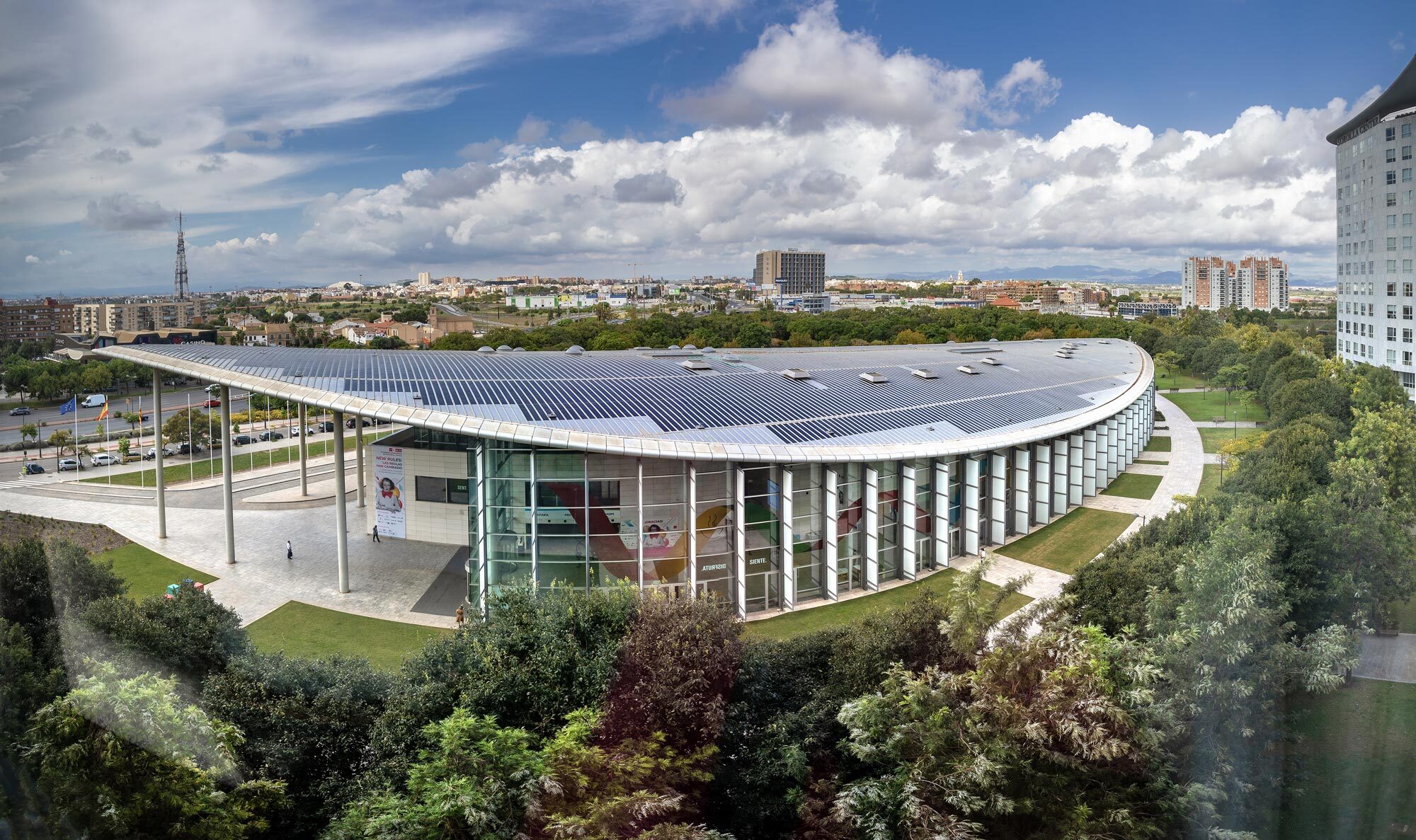
Palacio de Congresos de València
INTRODUCTION
The project
SMART-TOURISM 360 set out to show that autonomous service robotics and IoT, supervised from a single platform, can take on the repetitive operational work of a tourism venue without disrupting the service around it.
Deliverance Enterprises completed SMART-TOURISM 360 under the FU-TOURISM Acceleration Programme, validating the solution in a real public-facing environment where it ran in everyday service until the project closed on 31 January 2026. Two service robots — one cleaning, one waiter — and the Deliverance robotics SaaS platform (release v0.3.7) were deployed in production at the Palacio de Congresos de València through the València Sandbox Urbano programme, serving the venue and its subcontractors daily.
Across the full project the team delivered venue mapping and Wi-Fi integration, coordination with the catering and cleaning subcontractors, installation of the waiter robot in the cafeteria and the cleaning robot in the lobby on an 18:00 cycle, and supervised operation of both units to project closure — monitored in real time from the platform, which provided device dashboards, task history, telemetry and automated performance reports. Internal testing at Deliverance's own premises closed the items the Sandbox scenario did not cover: multi-robot coordination, 5G fail-over, recharge cycles and cybersecurity hardening.
Beyond the grant, the validated platform and robotic service configuration are now part of Deliverance's commercial product line, offered to hospitality and venue operators, with the remaining roadmap pillars financed from the company's own resources.
Challenge 2
Attraction and training of human resources in tourism — repetitive, physically demanding tasks absorbed by the fleet while staff moved to supervision and customer-facing roles.
Challenge 4
High energy consumption in the tourism sector — IoT energy telemetry establishing the measurement layer that any reduction target depends on.
Challenge 7
Enhancing the tourist experience through technology — public-facing robots interacting directly with attendees and cafeteria customers.
THE SOLUTION
Two robots and one platform
SMART-TOURISM 360 was delivered as the integration of two autonomous service robots with the Deliverance Platform, a multi-tenant SaaS that plans, supervises and analyses their operation in real time.
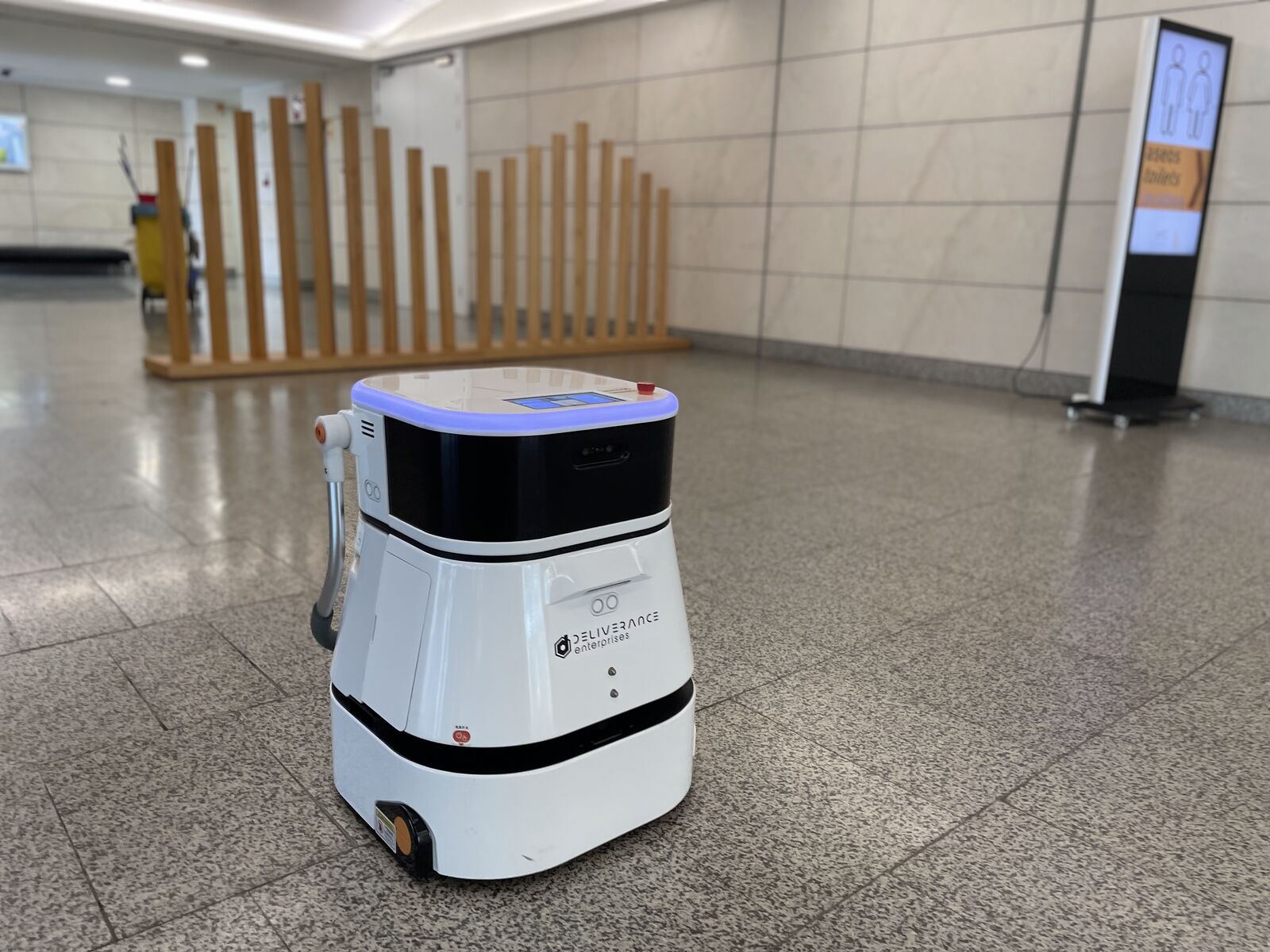
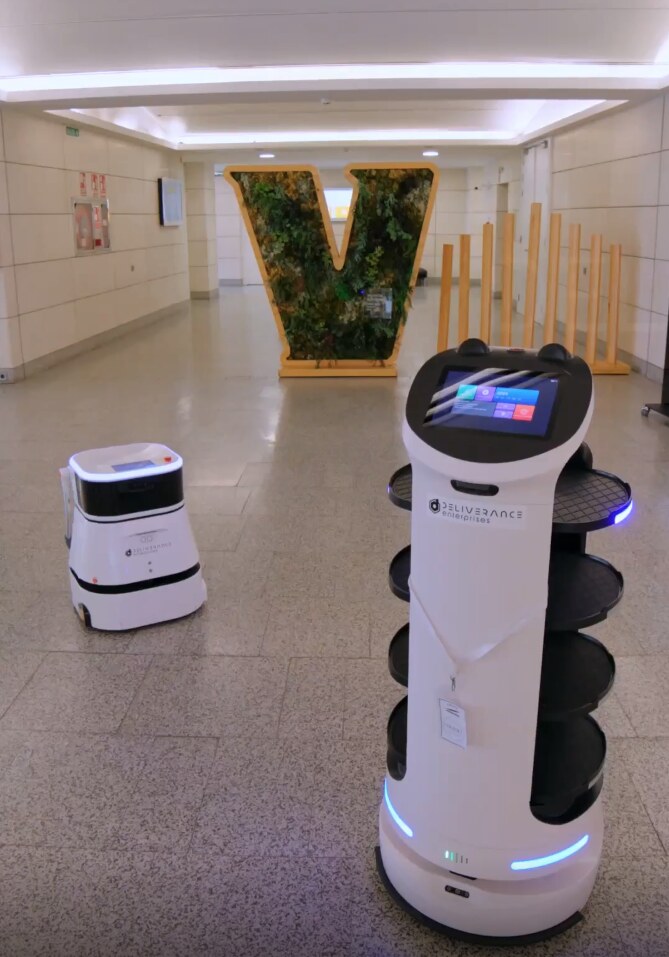
Cleaning robot
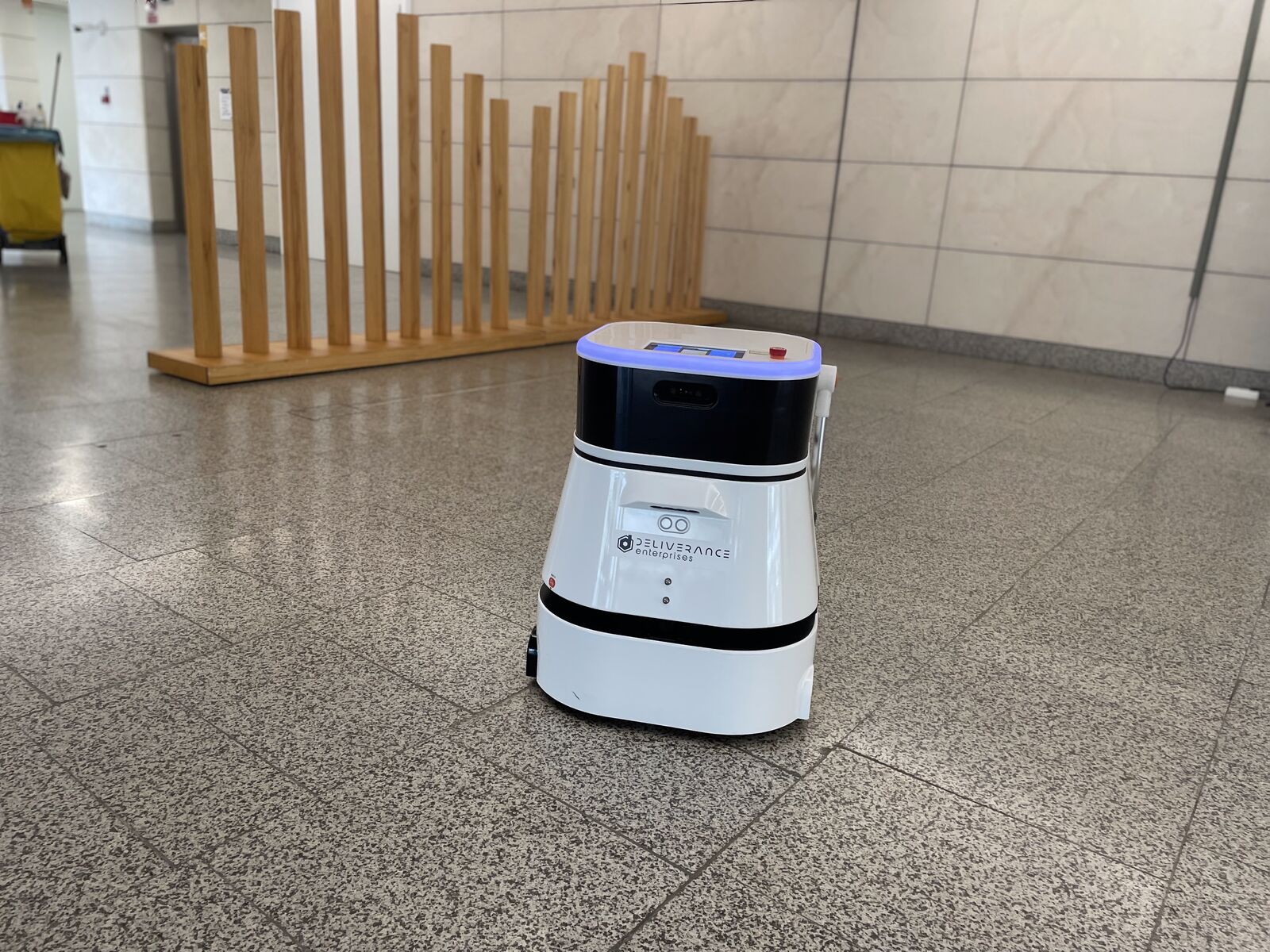
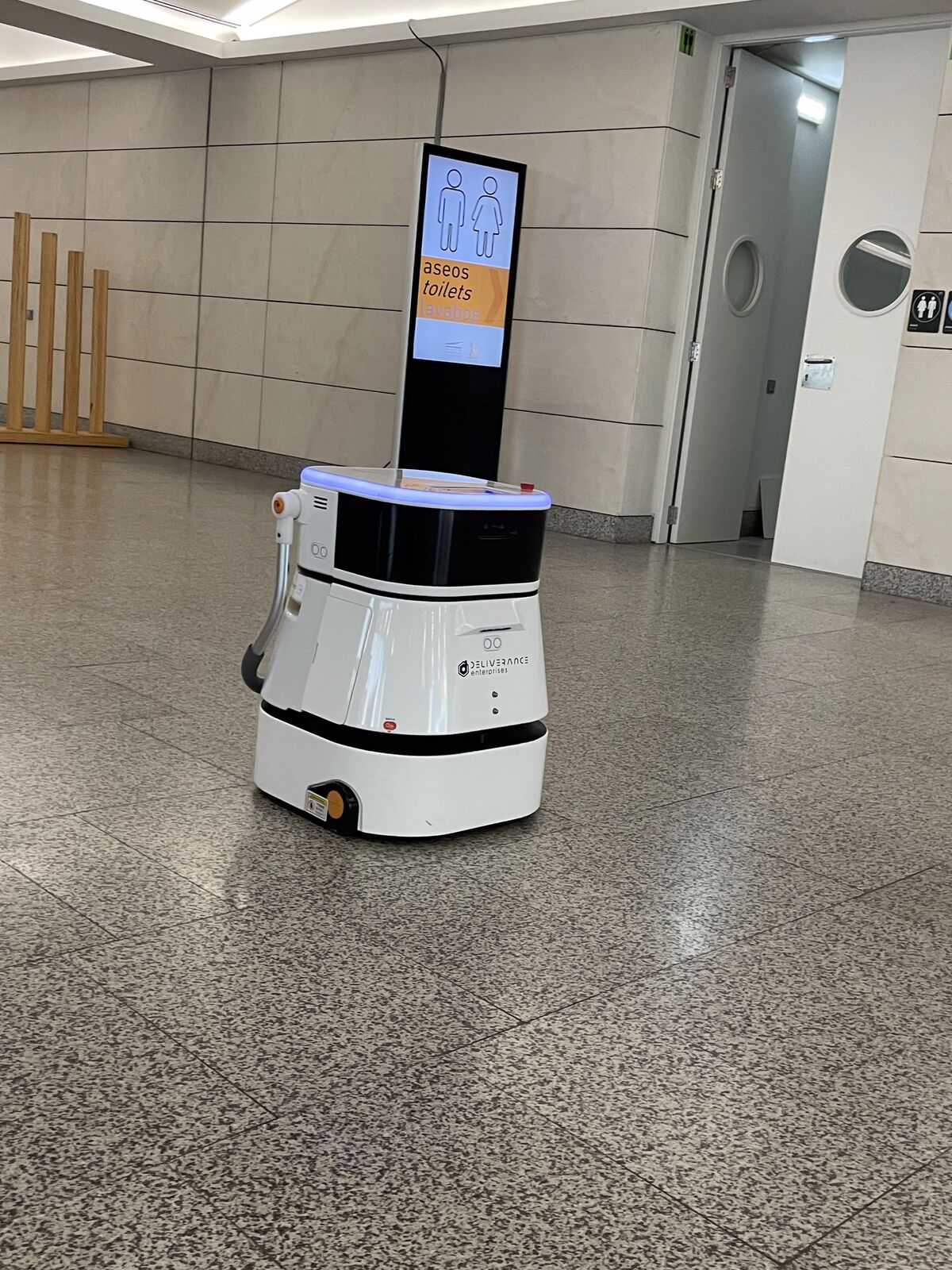
50 × 51 × 63 cm, 20 L tank. Predictive cleaning routines dose water and chemical product to the mapped area and its actual use rather than to a fixed schedule. Autonomous recharge between shifts, locked 18:00 vestibule and foyer window, with additional interventions available on demand.
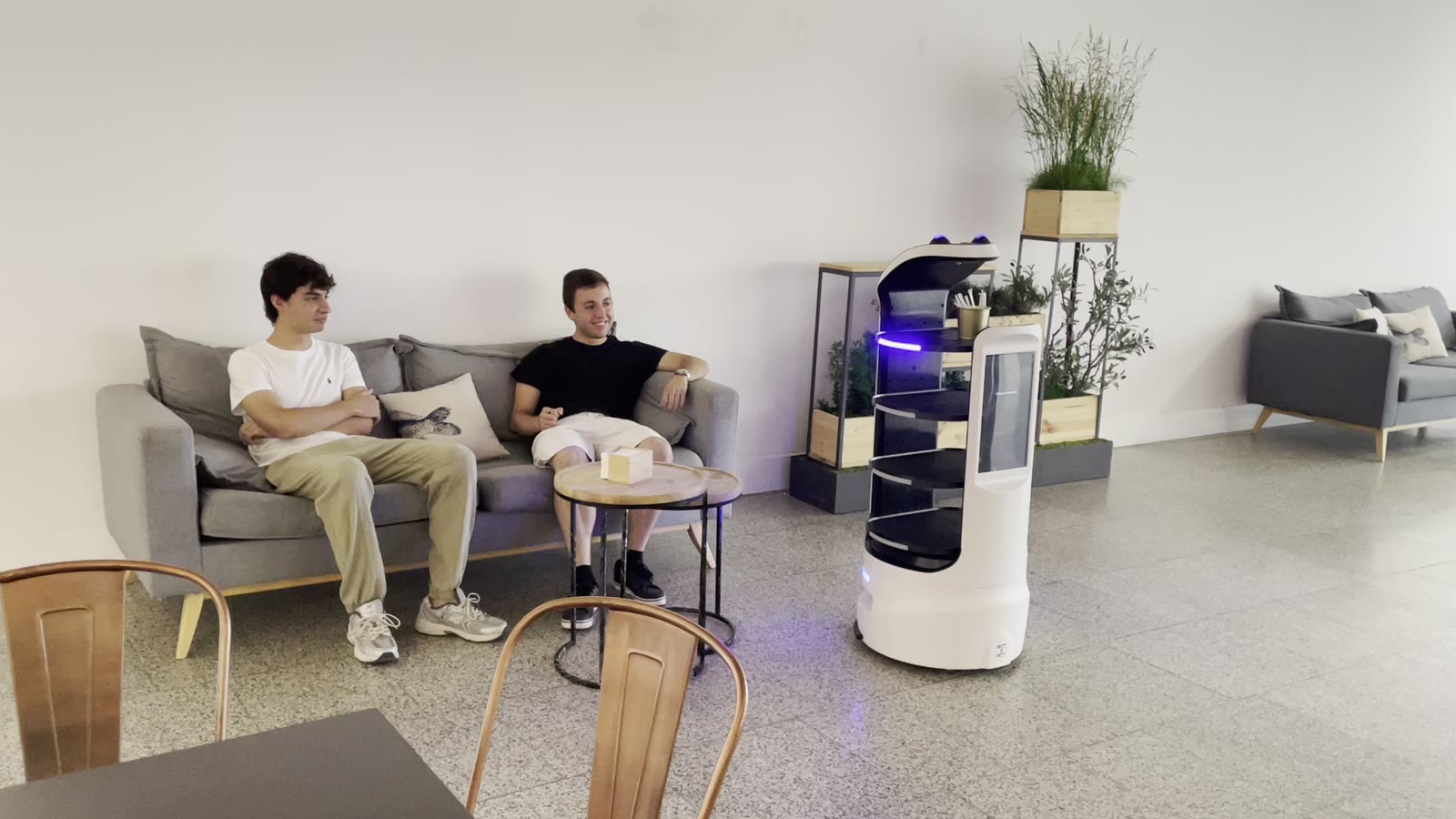
Waiter robot
50 × 53 × 130 cm, four 10 kg trays, interaction screen. Delivery routes defined between the collection point and marked stop positions, with tray labelling for dietary restrictions (gluten-free, vegetarian and similar) so allocations stay identifiable at the point of delivery.
Deliverance Platform
Seven functional modules, all of them in operational use during the pilot.
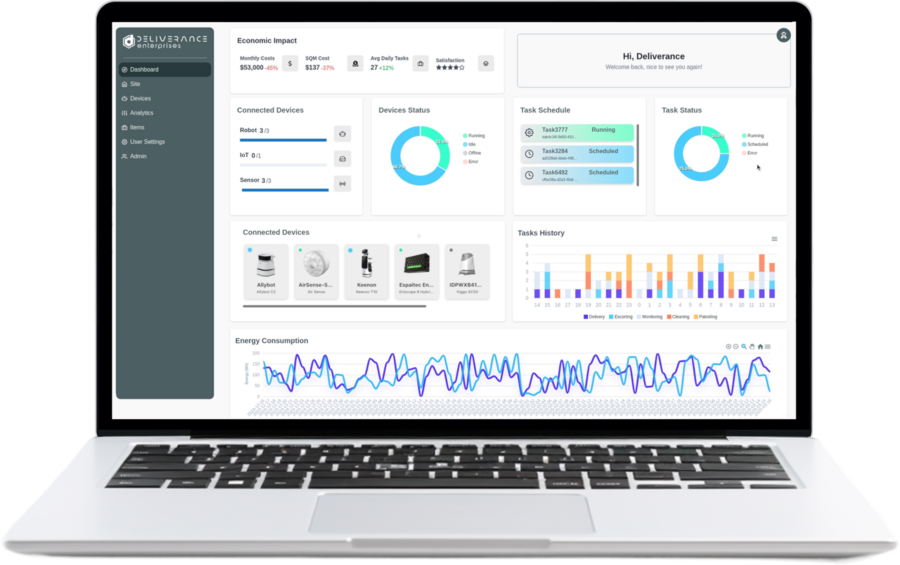
Login & access control
Identification and secure access per user and organisation.
Dashboard
Real-time overview of device operation: status, task state, task history, performance metrics and IoT energy readings.
Devices
Fleet management and provisioning across organisations, with filtering, assignment and per-device detail.
Monitor
Live operational view of the selected device, with detailed task list and task detail.
Analytics
Operational reporting per organisation with automatic PDF / e-mail generation, fleet analytics and device-level IoT analytics.
User settings
User and organisation profiles, notification and alarm configuration.
Admin panel
Hierarchical management of users and organisations.
OBJECTIVES
Achieving the automated venue of the future
Four objectives were declared in the application, each mapping onto one or more of the FU-TOURISM priority challenges. Below is what each one set out to do, followed by its final status at project end.
Automated Energy Management
Application pillar 1 · FU-TOURISM Challenge 4
Instrument the energy use of a tourism facility and close an optimisation loop on it. IoT energy meters and environmental sensors feeding the platform, consumption analytics and dashboards over that telemetry, so that a venue can measure what it spends on energy — the precondition for reducing it — and act on the readings.
Final status
The telemetry views and IoT device analytics were delivered and validated on an IoT network built at Deliverance's own offices. They could not be exercised at the pilot venue, whose HVAC and lighting systems were outside the pilot scope, so no site energy figures were recorded for the optimisation loop.
Automated Workforce & Robotics
Application pillar 3 · FU-TOURISM Challenges 2 and 7
Put autonomous service robots into the everyday cleaning and food-and-beverage routines of a real tourism venue: a cleaning unit running predictive routines that dose water and chemical product to actual need, and a waiter unit handling tray service including dietary restrictions — with the venue's own operating staff trained to run both.
Final status
Both units ran in production at the Palacio de Congresos from July 2025 to the close of the pilot on 31 January 2026, operated day to day in coordination with Gourmet Catering and Serveo.
Predictive Maintenance & KPI Dashboarding
Cross-cutting · FU-TOURISM Challenge 2
Give venue operators a single reporting layer over the deployed fleet: consolidated per-organisation KPIs covering robot performance and IoT telemetry, and predictive failure detection with an alerting workflow on top of that telemetry, so maintenance is scheduled before a unit goes out of service.
Final status
The reporting layer was delivered and generated the end-of-pilot KPI consolidation report. The predictive failure-detection algorithms and their alerting workflow were not completed within the project and are carried into the product roadmap.
Smart Room Controls & AI Digital Assistants
Application pillars 2 and 4 · FU-TOURISM Challenge 7
Extend the platform into the guest room: climate, lighting and touchless access under smart control, with an AI-powered digital concierge answering guests directly and driving those controls on their behalf.
Final status
Not validated. The venue made available by the Sandbox Urbano de València was a public conference centre rather than a hotel, so guest-room functions could not be exercised. The trade-off was validation of the robotics pillar in a real high-traffic public setting; this pillar is preserved in the product roadmap for hotel deployments.
THE PILOT
Palacio de Congresos de València
The proof of concept was a live deployment in real, public-facing conditions — not a laboratory. Both robots operated in everyday service from installation until the close of the pilot on 31 January 2026, supervised in real time from the platform.
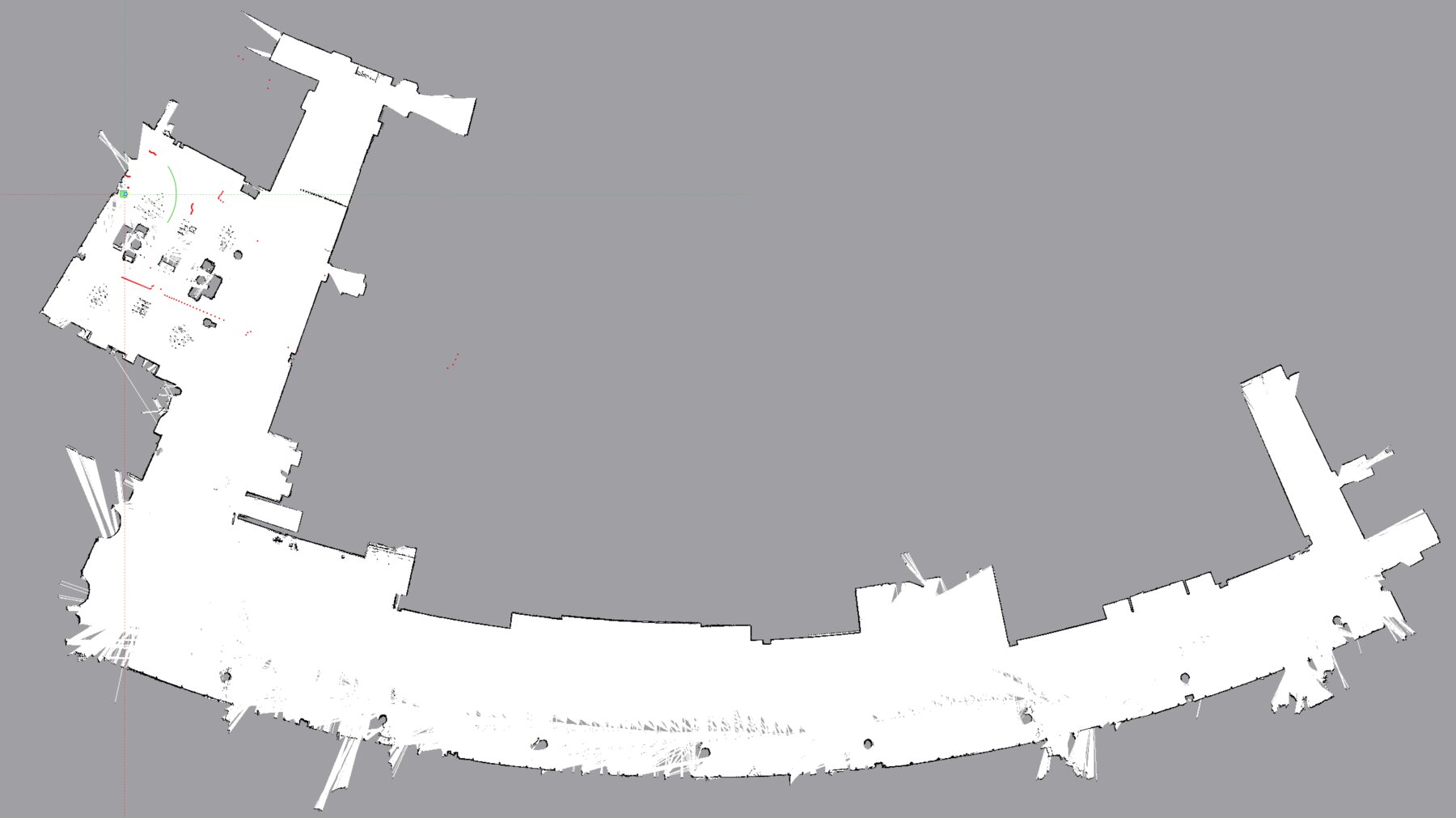
Site mapping and operational area
Deployment began with the on-site scanning session of July 2025, in which the operational area was fully mapped by SLAM across the vestibule, corridors and cafeteria. The resulting map was loaded into both robots so they could navigate the whole area autonomously, with the working zones of each unit delimited on it and sensitive areas geofenced.
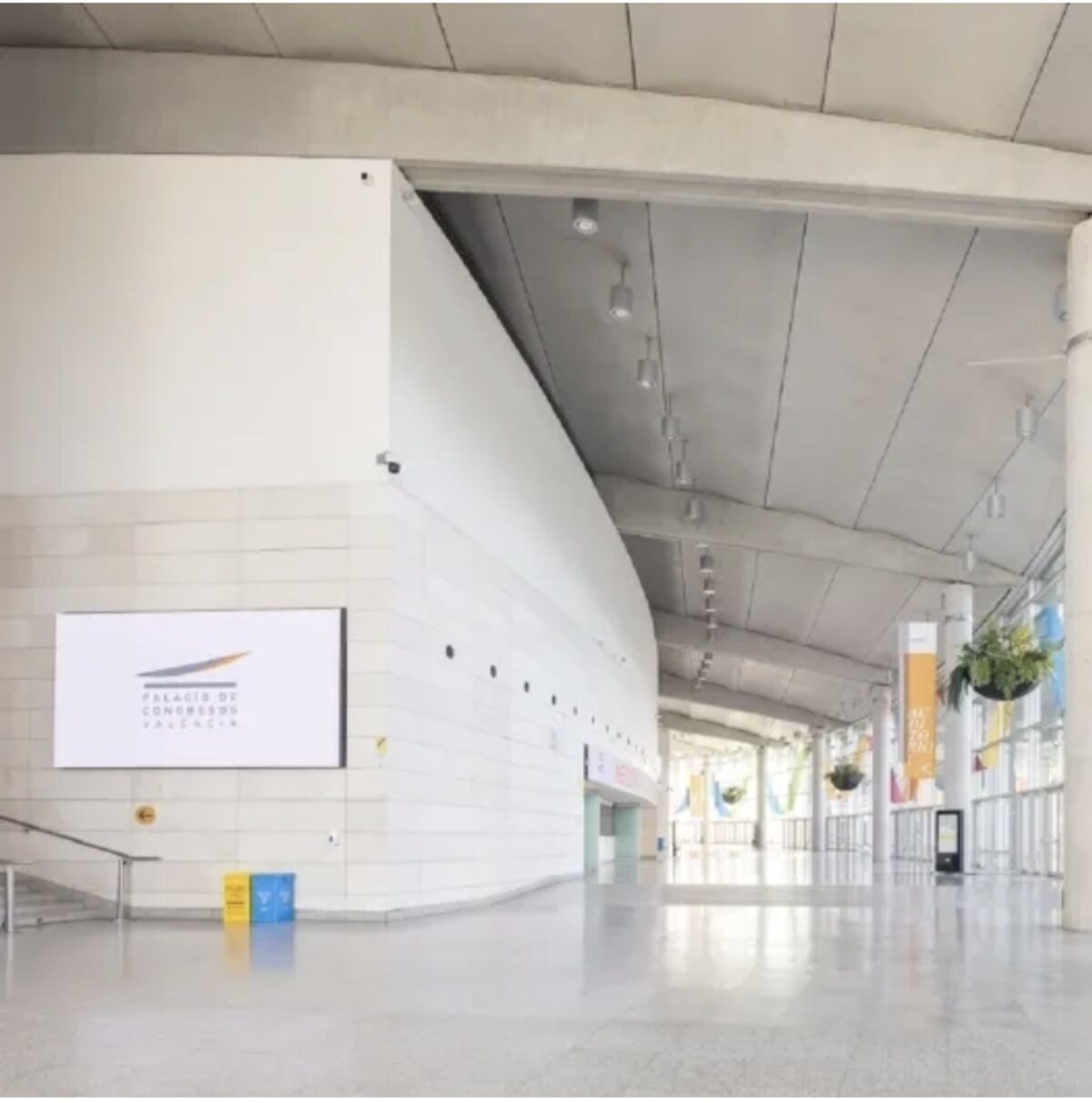
The venue
15,581 m² in total, of which 3,000 m² formed the operational area: vestibule, foyer, corridors and cafeteria. A high-traffic public conference centre with a variable event calendar and two distinct operating subcontractors.
Stakeholders on site

Sandbox Urbano de València
Ajuntament de València and Las Naves / València Innovation Capital. Granted access to the venue as a testing environment and oversaw the correct use of the sandbox resources.
Palacio de Congresos de València
Hosted the pilot and set the operational context, access conditions and safety framework.

Gourmet Catering
Catering subcontractor of the venue. Operated the catering service into which the waiter robot was integrated and defined the dietary-labelling requirement.

Serveo
Facility-services subcontractor of the venue. Operated the cleaning service and set the requirement for a fixed, predictable cleaning window.
Milestones and activities
- M1
Venue mapping and Wi-Fi / robot integration
July 2025Full SLAM map of the main floor of the Palacio de Congresos produced, covering vestibule, corridors and cafeteria. Integration with the venue Wi-Fi infrastructure completed, kick-off coordination meeting held with Gourmet Catering and the venue operations team, and the waiter robot pre-installed.
- M2
Staff training (catering and cleaning)
July, September and November 2025Approximately 12 members of staff of the Palacio de Congresos, Gourmet Catering and Serveo trained on robot operation and on the Deliverance Platform, delivered in three sessions to follow partner availability and the summer closure of the cafeteria.
- M3
Continuous deployment and operation during events
November 2025 – 31 January 2026Both robots in continuous supervised operation, monitored from the Deliverance Platform. The pilot was extended from end November 2025 to end January 2026 at the proposal of the Palacio de Congresos team, to cover a richer event calendar.
- M4
KPI collection and analysis
January 2026End-of-pilot KPI consolidation report generated from the Analytics module of the Deliverance Platform: cleaning cycles, tray-delivery time, uptime, energy consumption and autonomous-recharge cycles.
- M5
Final report and scaling strategy
February – August 2026Interim report delivered to the Palacio de Congresos, scaling strategy for replication in comparable tourism and hospitality venues consolidated, and the Final Technical & Financial Implementation Report submitted.
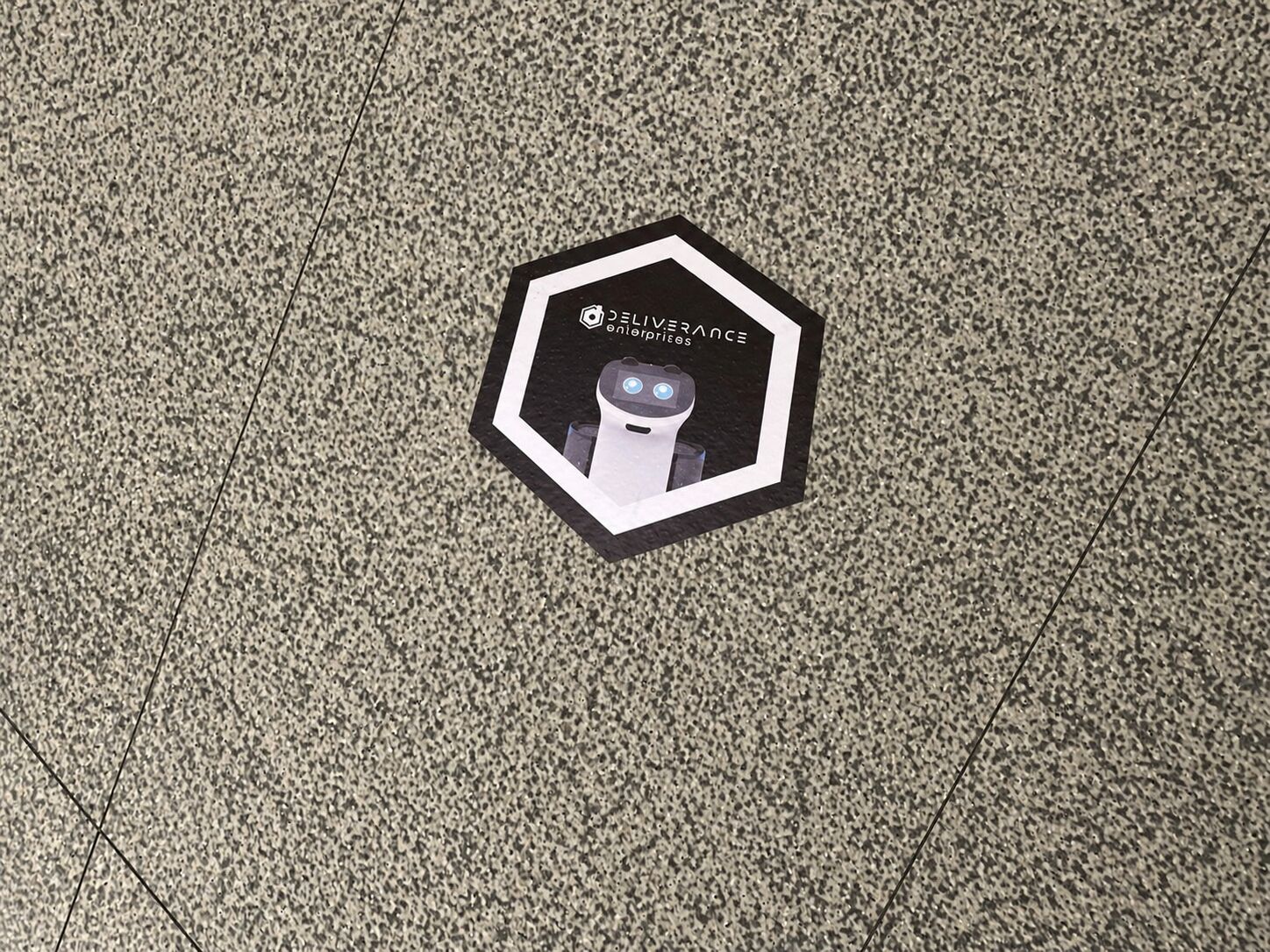
Adapting to how the venue actually runs
The cafeteria is rearranged between events, so the waiter robot's stop positions could not depend on the furniture layout. Floor markers were installed to lock those references physically. In the same spirit, the cleaning shift was fixed at 18:00 at the request of Serveo and the venue, and the platform's configuration screens were brought forward so the operating teams could make routine changes themselves.
Safety and regulatory framework
Operation was configured to comply with the applicable regulatory framework: CE marking, GDPR / LOPDGDD for video logs, EN 60825-1 for LiDAR safety and EMC 2014/30/EU.
- Speed limitation in the presence of the public
- Light and acoustic proximity signalling
- Physical and remote stop procedures available to venue staff
- Geofencing of sensitive areas on the SLAM map
SUPPORTING MEDIA
The deployment on record
Reference operation media of both robots in service at the Palacio de Congresos, and of the platform that supervised them.
Robots in operation
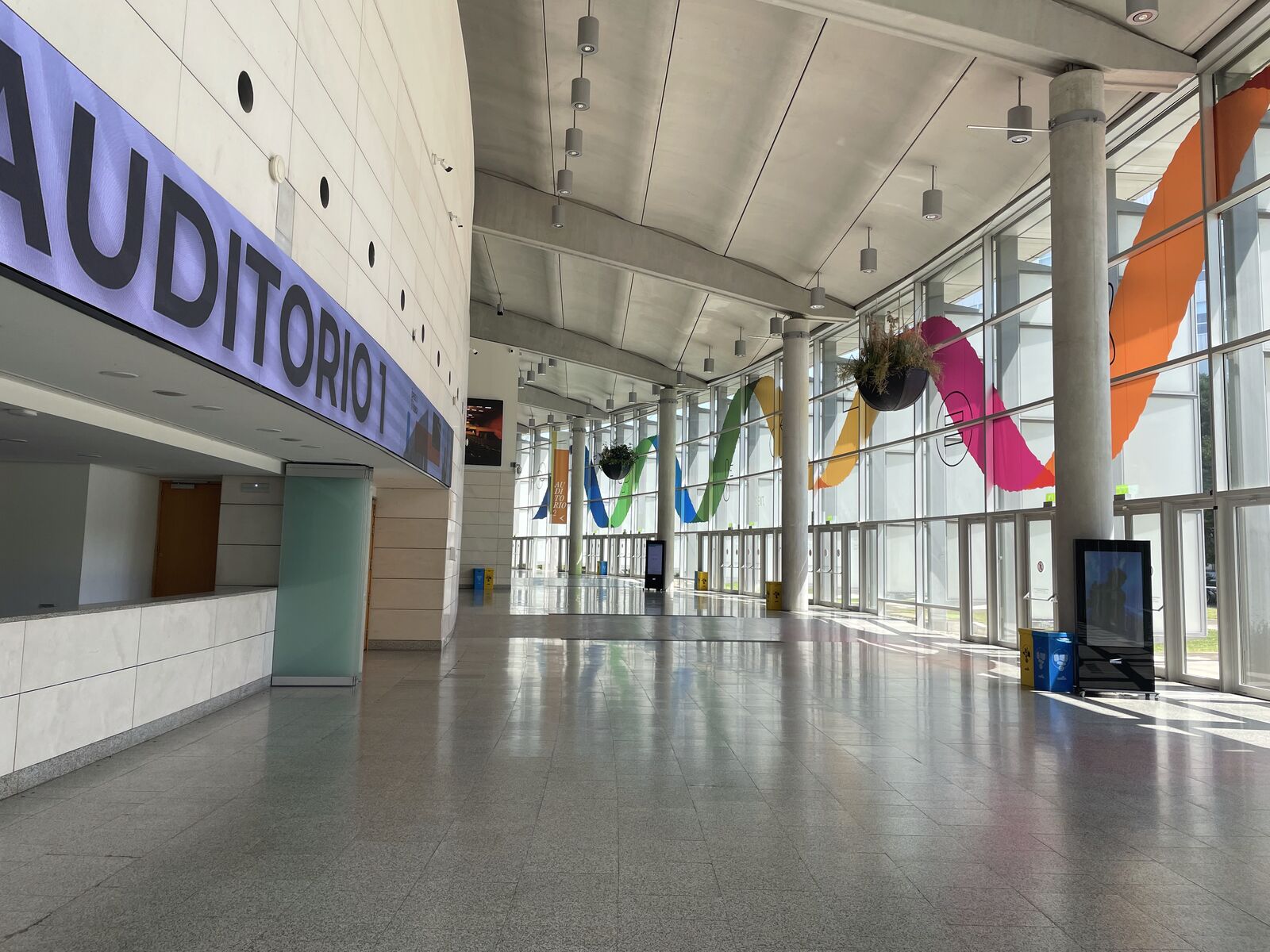
Cleaning robot on the vestibule shift
The cleaning robot covering the vestibule of the Palacio de Congresos on its locked 18:00 shift.
Cleaning robot in the foyer
Predictive cleaning routines dosing water and chemical product to the mapped area and its actual use.
Waiter robot in service
Tray delivery between the collection point and the marked stop positions during a catered event.
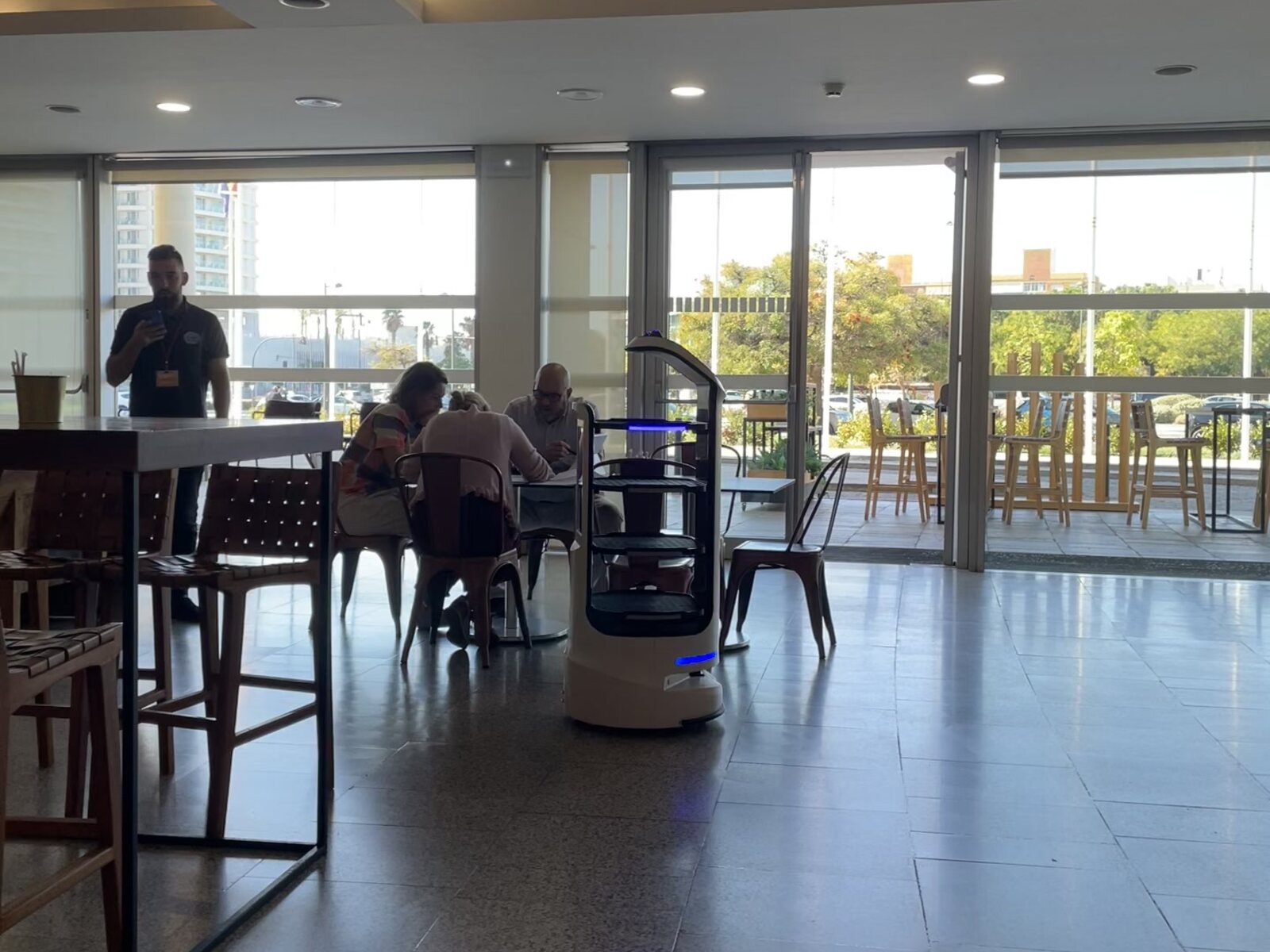
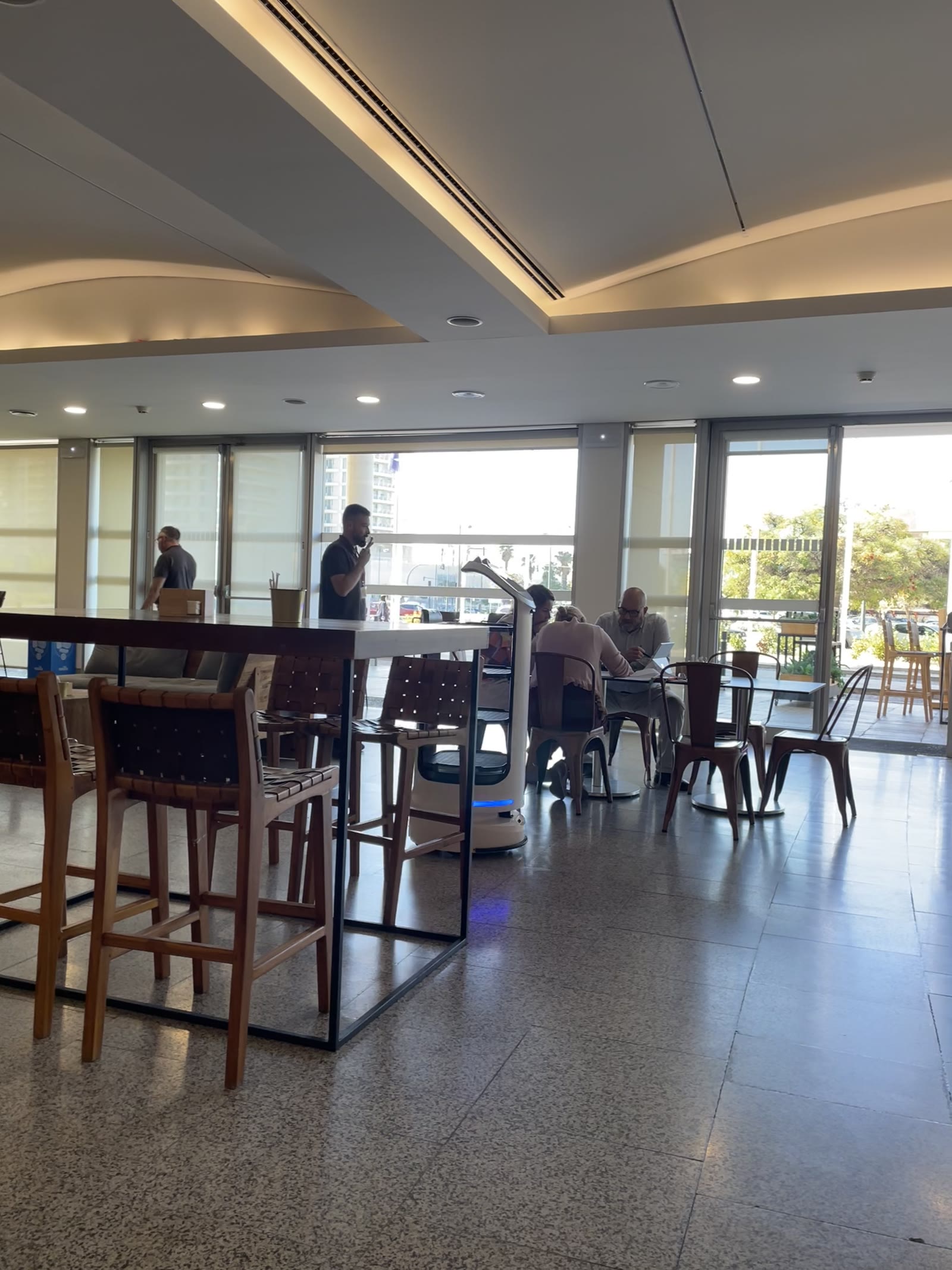
Waiter robot in the cafeteria
Everyday service in the venue cafeteria, alongside customers and the catering team.
Platform walkthrough
Deliverance Platform — product walkthrough
End-to-end walkthrough of release v0.3.7: dashboard, devices, monitor, analytics, settings and admin panel.
Installation and everyday service
Inside the platform
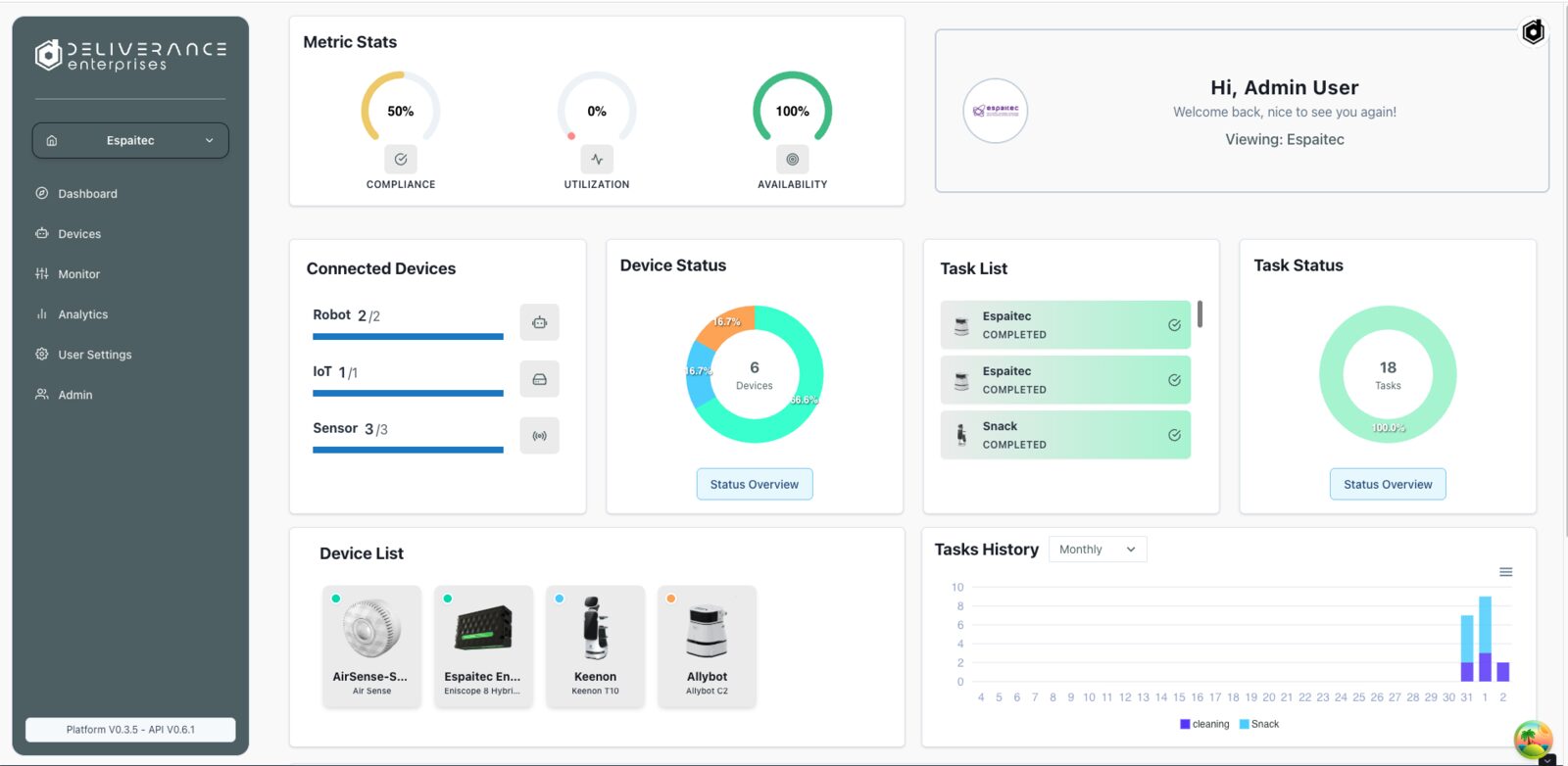
Dashboard
Real-time overview of the deployed devices: status, task state, task history and performance metrics.
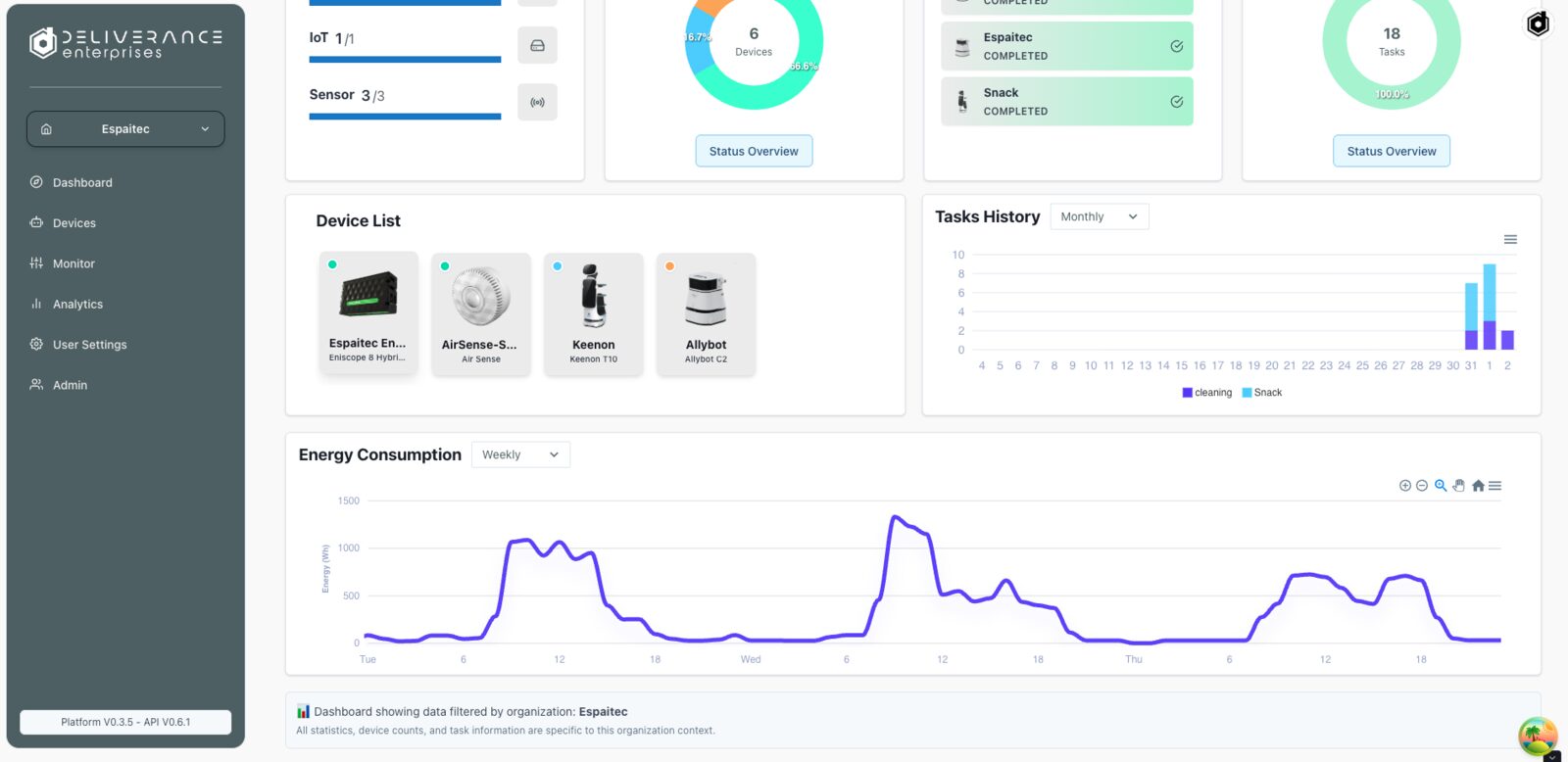
Energy consumption
IoT-based energy readings consolidated per organisation and device.
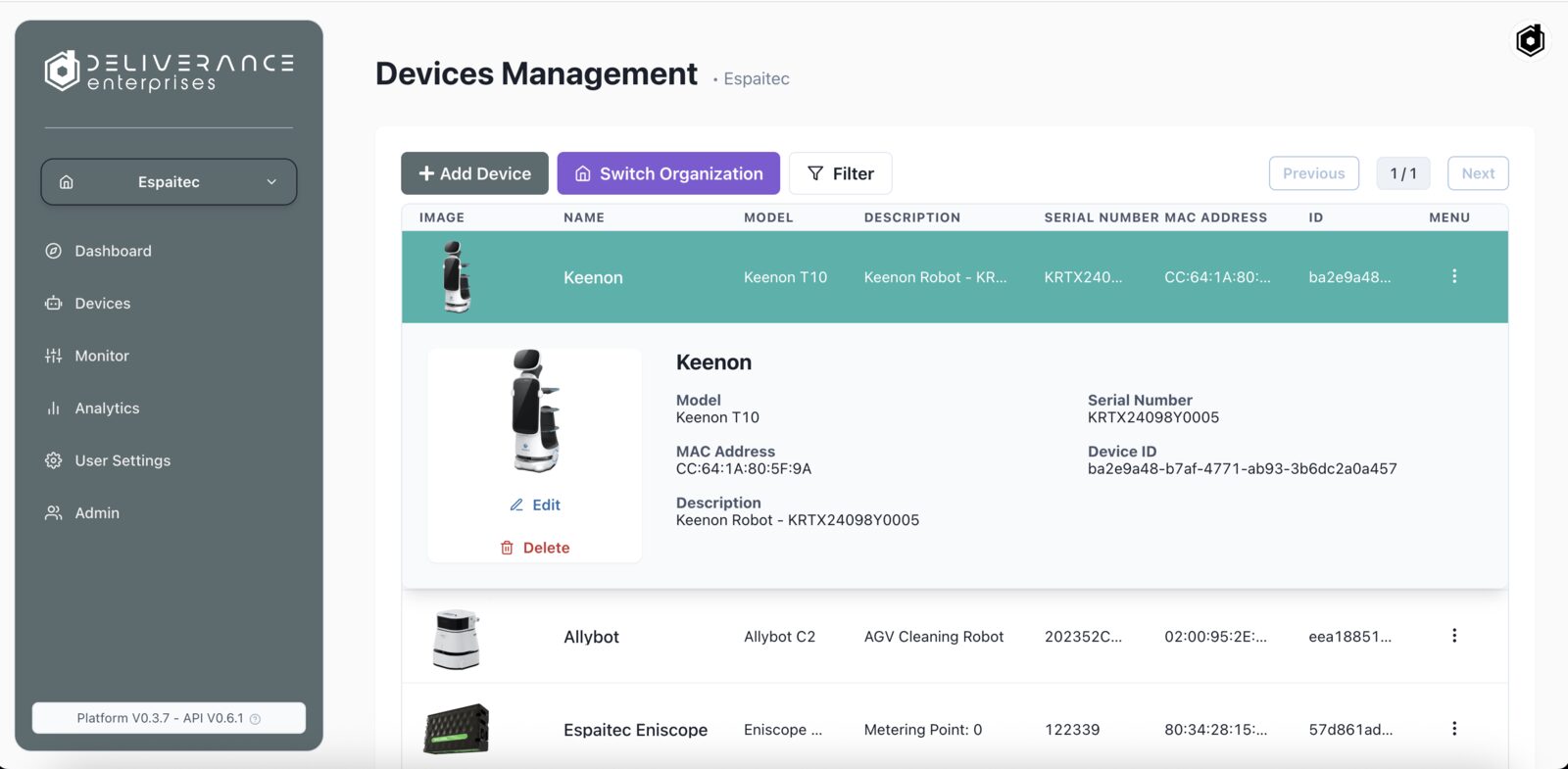
Devices
Fleet management and provisioning across organisations, with per-device detail.
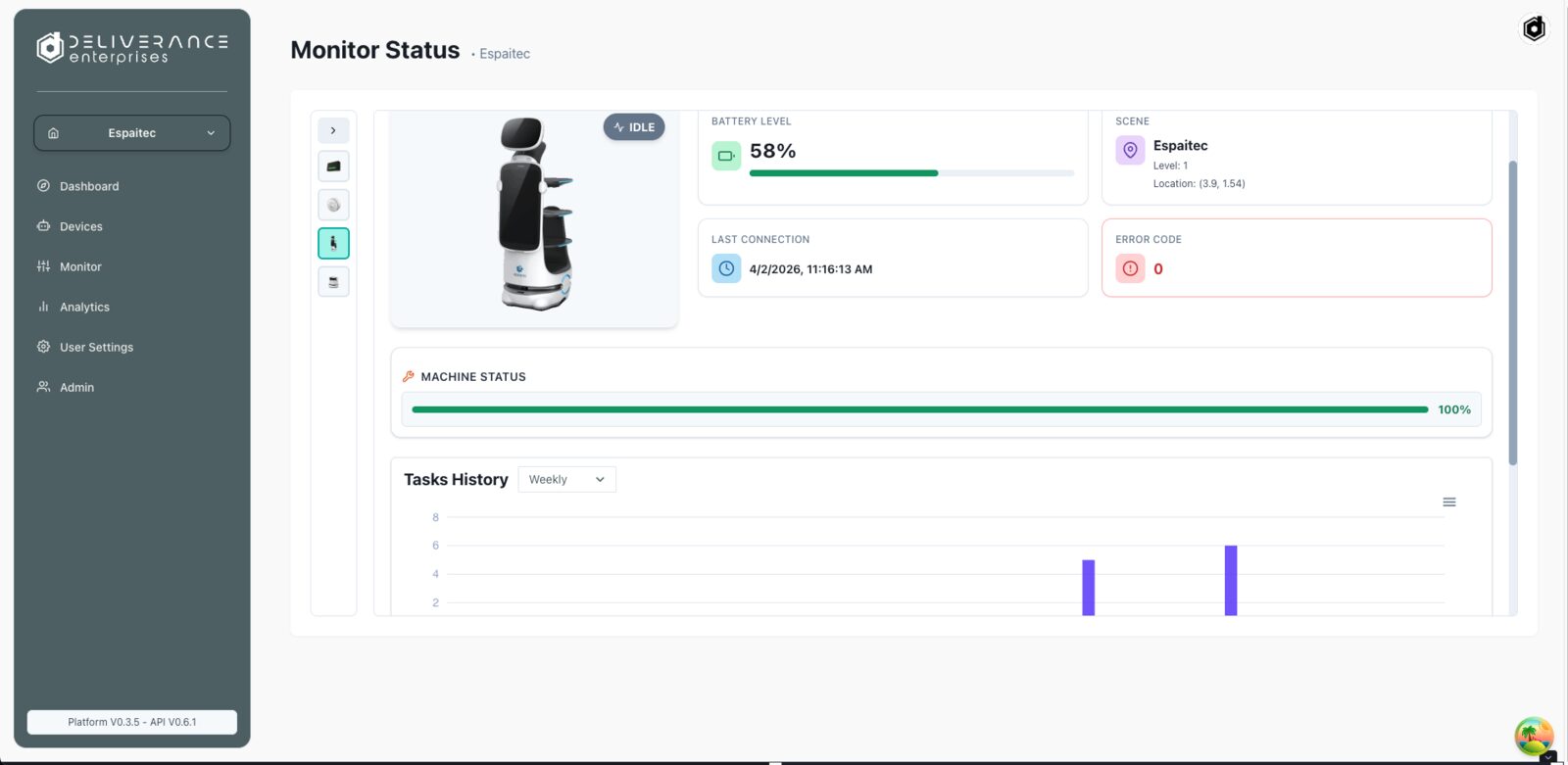
Monitor
Live operational view of the selected robot, with its task list and progress.
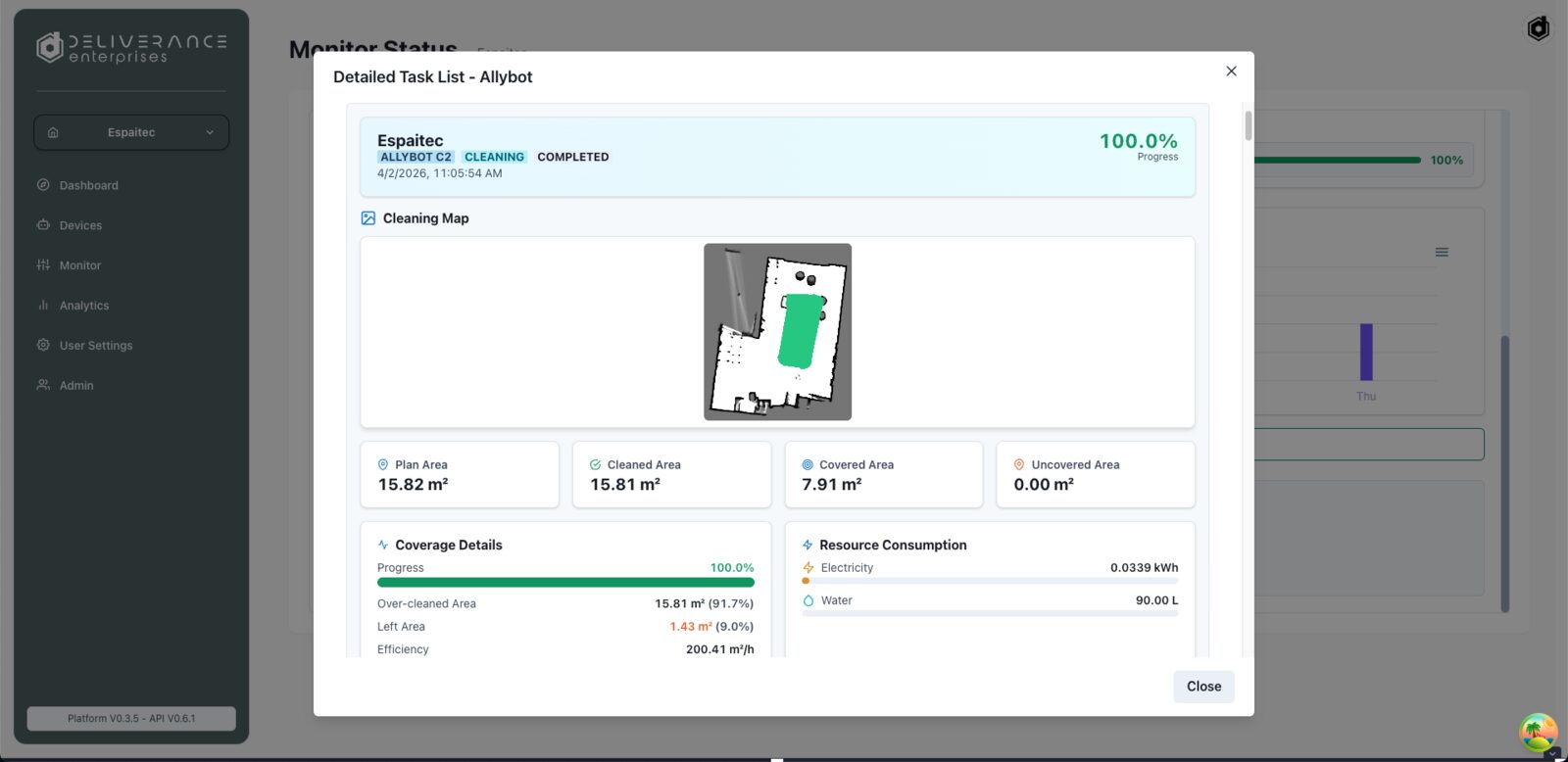
Task detail
Cleaning map, area covered, duration and resource consumption for a completed task.
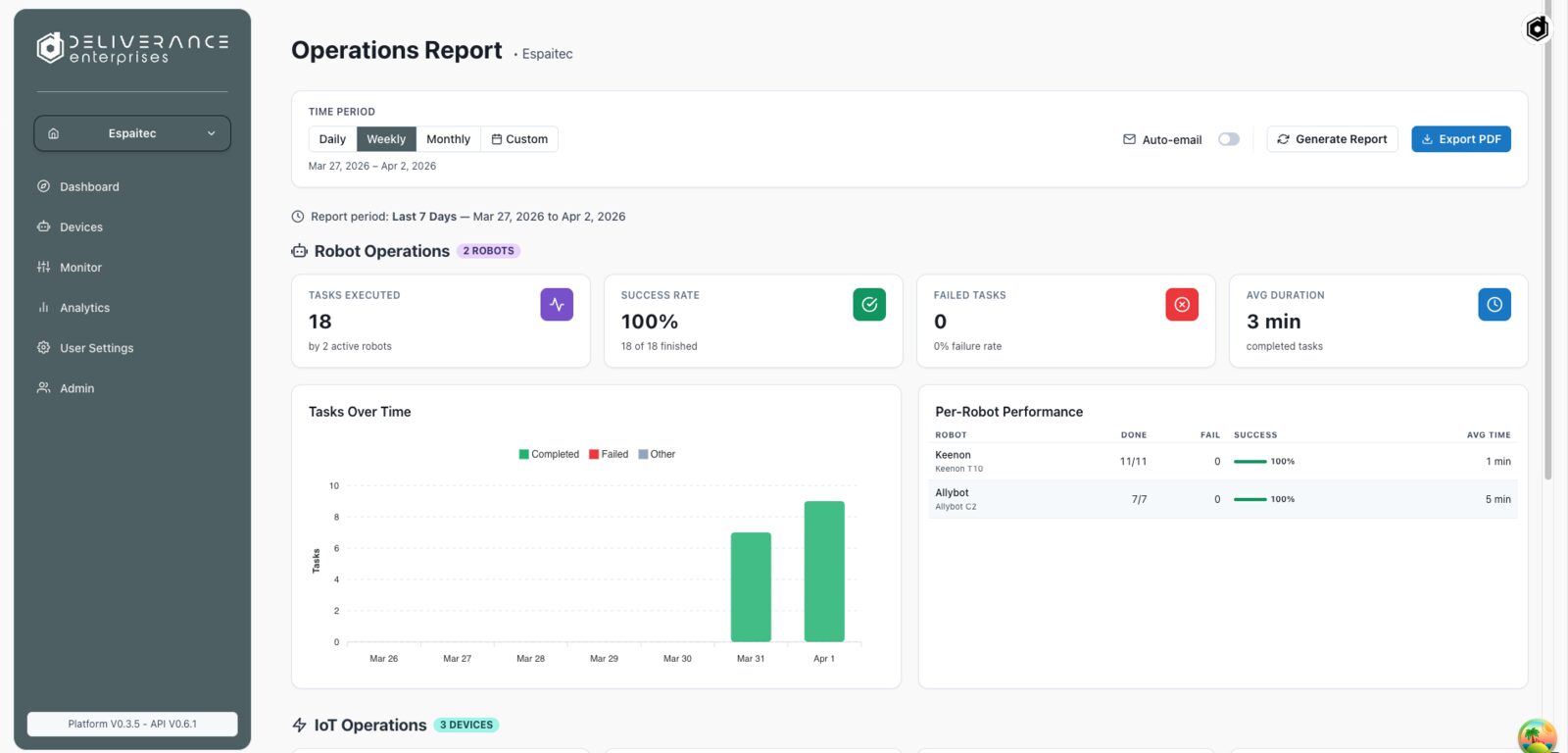
Operations report
Automatic PDF / e-mail reporting per organisation over a selected period.
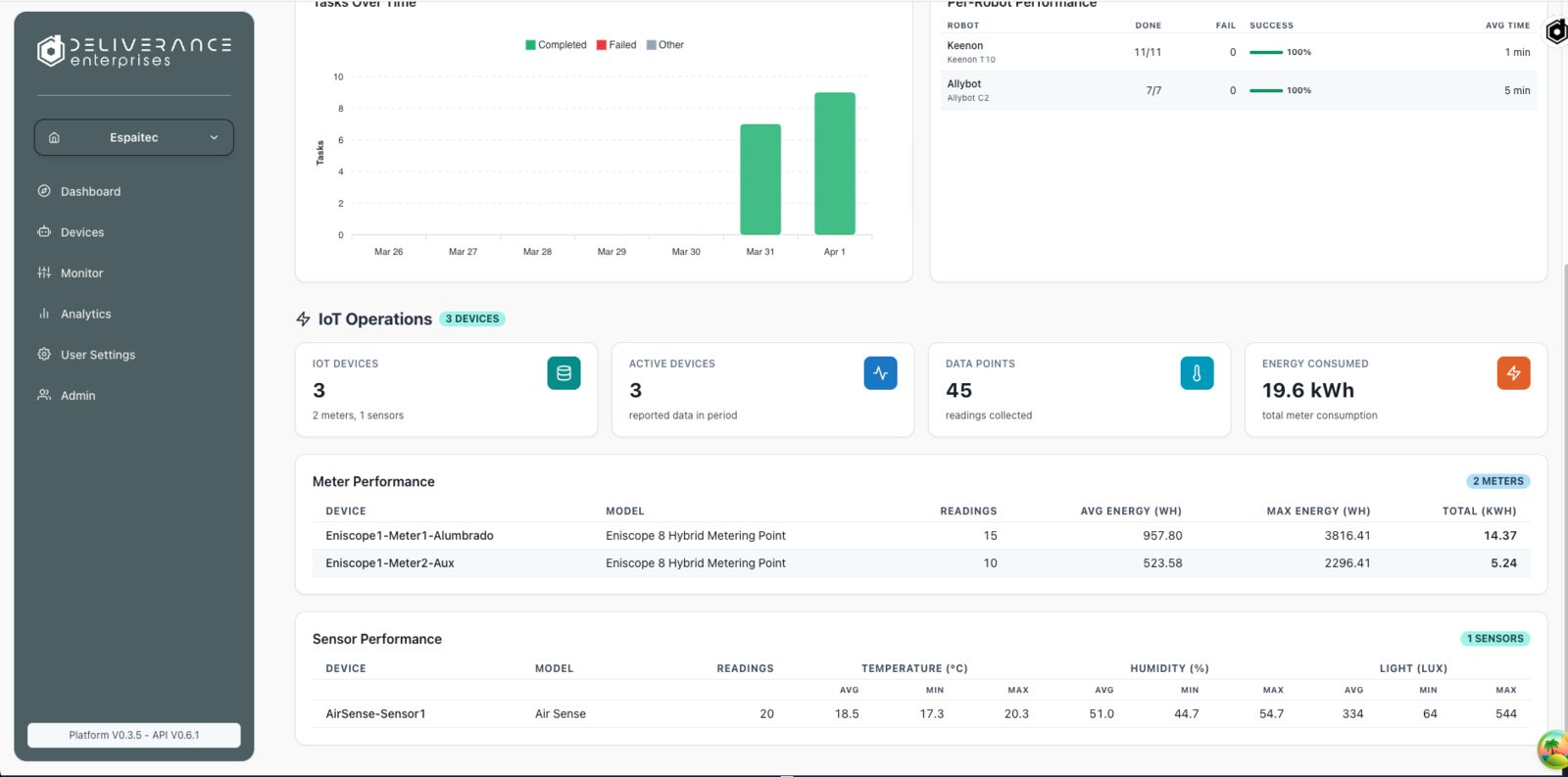
Fleet analytics
Robot fleet and IoT device analytics used to build the end-of-pilot KPI report.
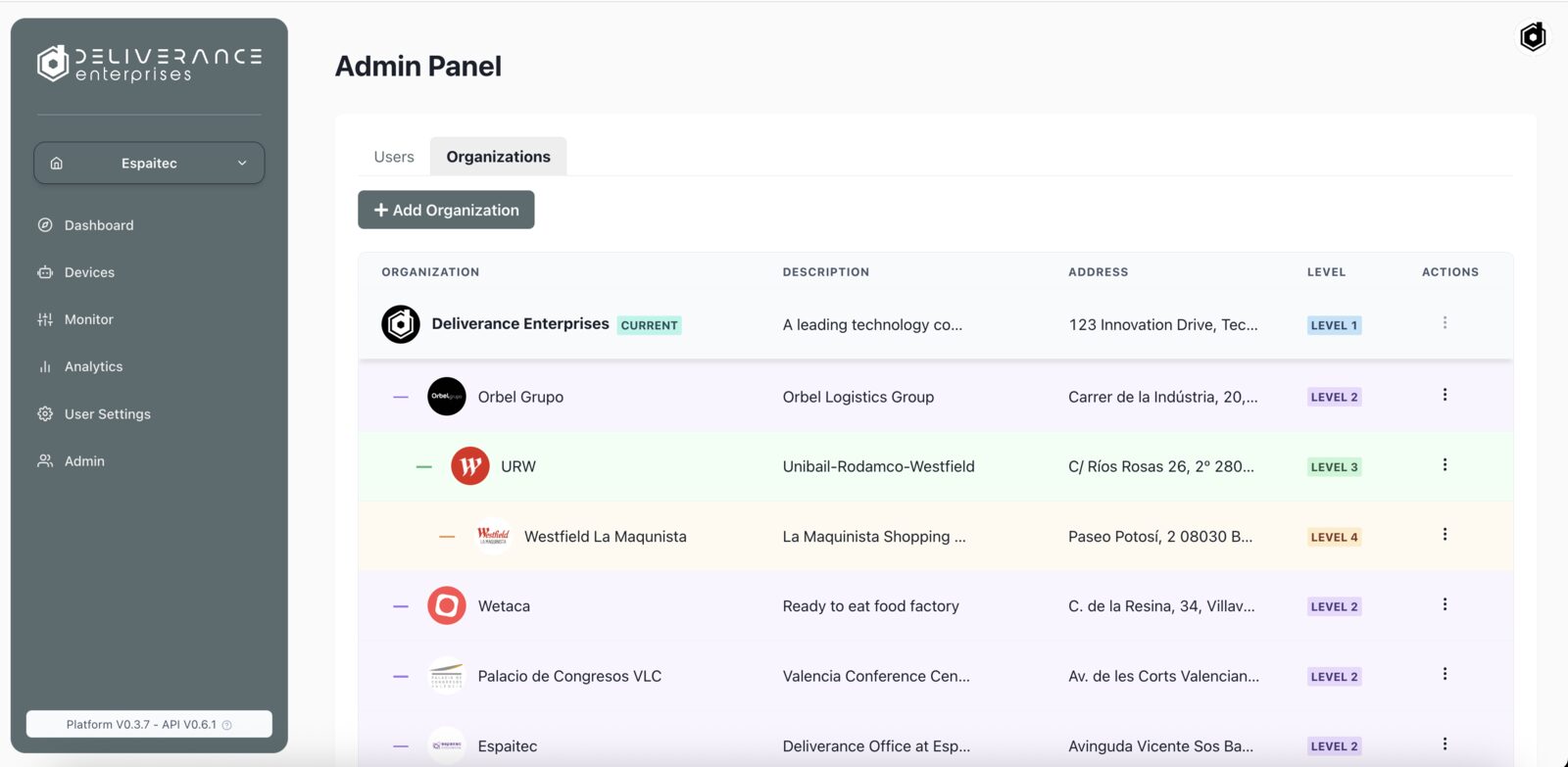
Admin panel
Hierarchical management of users and organisations in the multi-tenant model.
NEWS PORTAL
Press and dissemination
Public outputs generated around the pilot, by the Ajuntament de València, the Sandbox Urbano programme and independent media.
El Sandbox Urbano prueba dos robots de servicio en el Palacio de Congresos
Official publication by the Ajuntament de València presenting the pilot within the first year of the Sandbox Urbano de València, prepared jointly with Las Naves / València Innovation Capital.
Sandbox Urbano de València — institutional video featuring the pilot
Third-party audiovisual confirmation of the deployment, produced by the Ajuntament de València and published on its official channel.
València, banco de pruebas de tecnología urbana
Independent media reporting on the Sandbox Urbano de València programme and the pilot projects it hosts.
El Sandbox Urbano de València amplía los recursos disponibles e impulsa nuevos proyectos piloto
External confirmation of the pilot context and of the expansion of the Sandbox Urbano programme.
Sandbox Startup VLC
Publication of the pilot within the València Innovation Capital programme page.
The third-party publications above were issued by the Ajuntament de València and by independent media under their own editorial control, and therefore carry the visibility of the Sandbox Urbano programme. The FU-TOURISM and EU acknowledgement required by Article 6 of the Grant Agreement is carried by this page and by Deliverance's own materials and channels.
IMPACT & NEXT STEPS
After the grant
The results are already embedded in Deliverance's commercial product line, which is how they will be sustained without FU-TOURISM funding.
Sustainability and green transition
Predictive cleaning routines apply water and cleaning products according to actual need and mapped area rather than a fixed manual routine, avoiding over-use of both. Tray-based service reduces waste at catering peaks. The platform's IoT energy telemetry provides the measurement layer without which energy reduction in a hotel or venue cannot be managed — the core of FU-TOURISM Challenge 4.
Both mechanisms are venue-independent: mapping, cleaning routines and telemetry views are configured per site rather than rebuilt.
Scale-up and route to market
The deployment recipe is repeatable and largely site-independent — SLAM mapping, connectivity integration, staff training and shift configuration — and was demonstrated in a demanding environment. Hotels, congress and exhibition centres, airports, museums and large restaurant operations share the same operational pattern.
The pilot also changed the route to market: facility-services and catering operators, not only venue owners, were identified as the decisive adopters. The offer is structured as robots-as-a-service plus a SaaS subscription rather than equipment sale.
Roadmap
Platform refinement
Further improvement of the existing modules, based on the operational feedback gathered from venue staff and subcontractors during the pilot.
Digital Twin module
Mirroring the venue and the deployed devices for predictive simulation, energy forecasting and what-if analysis before each event.
Predictive failure detection
Completion of the predictive algorithms and alerting workflow on top of the IoT telemetry, closing the pending part of Objective 3.
IoT energy metering
Integration of additional energy meters to close the optimisation loop described in the original proposal, closing the pending part of Objective 1.
With the contribution of the Single Market Programme of the European Union.
SMART-TOURISM 360 was carried out by Deliverance Enterprises S.L. under the FU-TOURISM Acceleration Programme, Grant Agreement No. 101121573.
Views and opinions expressed are those of the author(s) only and do not necessarily reflect those of the European Union or the granting authority. Neither the European Union nor the granting authority can be held responsible for them.
#FU-TOURISMacceleration · #EUTourism